
Agile Delivery
Run the teams that work in sprints without leaving the platform. Backlog, sprints, a board, a burndown chart and the retrospective — the same workspace as your plan-driven projects.
Sprint work, in the same place as everything else
Not every team runs a Gantt chart. The ones that work in sprints get a full agile toolkit — and it lives beside your delivery projects, not in a separate tool.
Backlog
Capture and rank the work waiting to be done. Prioritize the backlog, then pull items into a sprint when the team is ready to commit.
Sprints
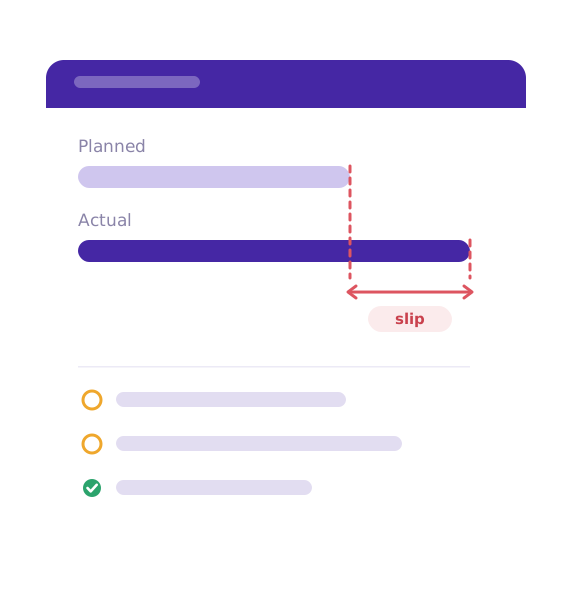
Plan a sprint with a goal and dates, commit a set of items, and track what gets done against what was promised — without a spreadsheet on the side.
Board
A drag-and-drop board moves work across your columns as it progresses, so the whole team can see where every item stands at a glance.
Burndown
Watch the remaining work fall across the sprint, so a team that's about to run out of runway sees it early — not at the review.
Velocity
Track how much a team actually completes each sprint, so planning the next one starts from evidence instead of optimism.
Retrospectives
Close each sprint with a structured retro — what went well, what to improve, what to act on — and promote an action straight back into the backlog so it doesn't get lost.
A closer look
One organization, both ways of working
A rollout runs on a schedule; a product team runs on sprints. In most shops those teams live in different tools, and leadership stitches the picture together by hand.
Here they share one workspace. The plan-driven projects and the agile teams report into the same organization, under the same roles and the same record — so you don't trade visibility for the method each team prefers.
The retro that actually changes the next sprint
A retrospective is only worth the time if its conclusions turn into work. Too often the notes are written down and never seen again.
An action item from the retro can be promoted directly into the backlog, where it gets ranked and pulled into a sprint like anything else — so the lesson becomes a task, not a memory.